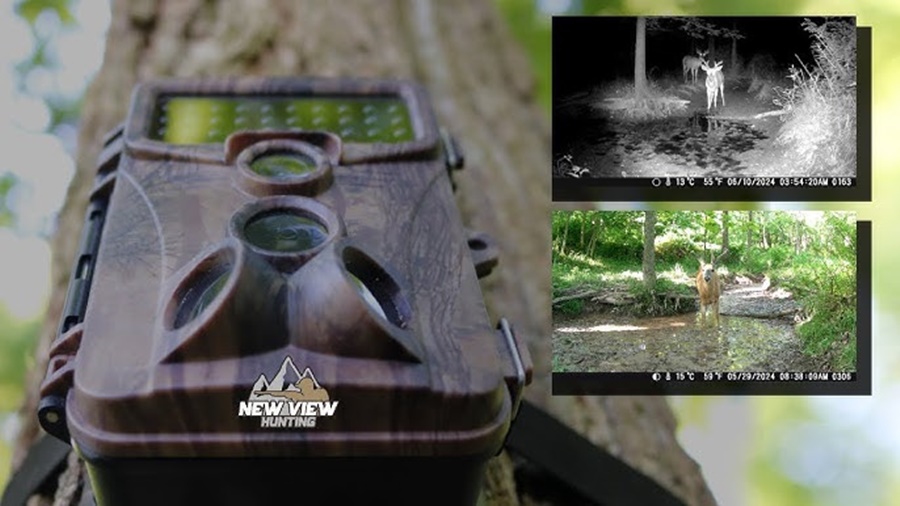
A 4K trail camera, with a resolution of 3840 x 2160 pixels, delivers more than four times the detail of an HD model at 1080p (1920 x 1080 pixels). While 4K offers superior image quality, your decision should be guided by your budget and storage capabilities, as these high-definition models can be pricier and demand more storage space.
This article explains the full comparison between HD and 4K trail cameras covering resolution, image quality, storage, battery life, cost, and practical use cases so you can make an informed decision.
Understanding HD and 4K Resolution
The primary difference between HD and 4K trail cameras lies in resolution, which refers to the number of pixels in an image or video.
- HD (1080p): 1920 × 1080 pixels (about 2 million pixels)
- 4K (Ultra HD): 3840 × 2160 pixels (about 8 million pixels)
This means 4K offers four times more detail than HD.
In theory, more pixels result in sharper, clearer images. However, resolution alone does not determine overall performance.
Image Quality: Is 4K Always Better?
1. Detail and Sharpness
4K trail cameras excel at capturing fine details. You can zoom in on footage and still identify features like animal markings or distant movement.
This makes 4K ideal for:
- Wildlife research
- Long-distance monitoring
- Security where identification matters
2. Real-World Performance
Despite higher resolution, 4K does not automatically guarantee better results. Factors such as sensor quality, lens, and lighting conditions play a major role.
A high-quality HD camera can outperform a low-end 4K model, especially in challenging environments.
For example:
- In low light (dawn/dusk), HD cameras with larger sensors may produce clearer images
- Cheap 4K cameras may show noise, blur, or poor color accuracy
Key insight: Resolution is just one piece of the puzzle.
Low-Light and Night Performance
Trail cameras are often used at night, making infrared (IR) and low-light performance critical.
- HD Cameras:
Often perform better in low light because pixels are larger and capture more light - 4K Cameras:
Smaller pixels can struggle in darkness, leading to grainy footage if the sensor isn’t high quality
Research shows that poor lighting and motion blur not resolution are major causes of misidentification in wildlife footage.
Storage and File Size
One of the biggest trade-offs with 4K is storage.
- HD (1080p): Smaller file sizes, easier to manage
- 4K: Much larger files due to higher pixel count
4K videos require more memory cards and faster storage systems.
Practical Impact:
- More frequent SD card changes
- Higher storage costs
- Slower file transfers
Battery Life
Higher resolution also affects battery consumption.
- HD Cameras: More energy-efficient
- 4K Cameras: Require more processing power, draining batteries faster
This is especially important for remote deployments where frequent battery replacement is impractical.
Frame Rate and Motion Capture
Many trail cameras sacrifice frame rate to achieve 4K resolution.
- Some 4K trail cams record at 15–30 fps, which can look choppy
- HD cameras often support smoother motion at higher frame rates
In fast-moving wildlife scenarios, frame rate can matter more than resolution.
Cost Comparison
- HD Trail Cameras: Affordable and widely available
- 4K Trail Cameras: More expensive, especially high-quality models
Although prices are decreasing, 4K still commands a premium due to advanced hardware.
When to Choose an HD Trail Camera
HD is often the smarter choice if:
- You are on a budget
- You monitor small or medium areas
- You prioritize battery life
- You need reliable night performance
- You don’t require extreme detail
For most hunters and casual users, HD provides excellent performance at lower cost.
When to Choose a 4K Trail Camera
4K is worth it if:
- You need to capture fine details at long distances
- You plan to zoom or crop footage
- You monitor large open areas
- You want the highest possible image clarity
4K is especially useful for research, professional wildlife observation, and high-end security setups.
Common Misconceptions About 4K
“4K Always Means Better Quality”
Not true. Poor sensor quality can make 4K footage worse than HD.
“More Megapixels = Better Results”
Only if supported by good hardware and lighting.
“All 4K Cameras Are True 4K”
Some trail cameras use interpolation (upscaling), not true native 4K.
Conclusion
Choosing between an HD and a 4K trail camera ultimately comes down to how you plan to use it. While 4K offers higher resolution and sharper detail, it also comes with trade-offs such as larger file sizes, higher cost, and increased battery consumption. On the other hand, HD trail cameras provide reliable performance, better efficiency, and are often more than sufficient for typical wildlife monitoring and security needs.
For most users, HD strikes the best balance between quality and practicality. However, if your goal is to capture fine details, monitor large areas, or professionally analyze footage, investing in a high-quality 4K trail camera can be worthwhile.