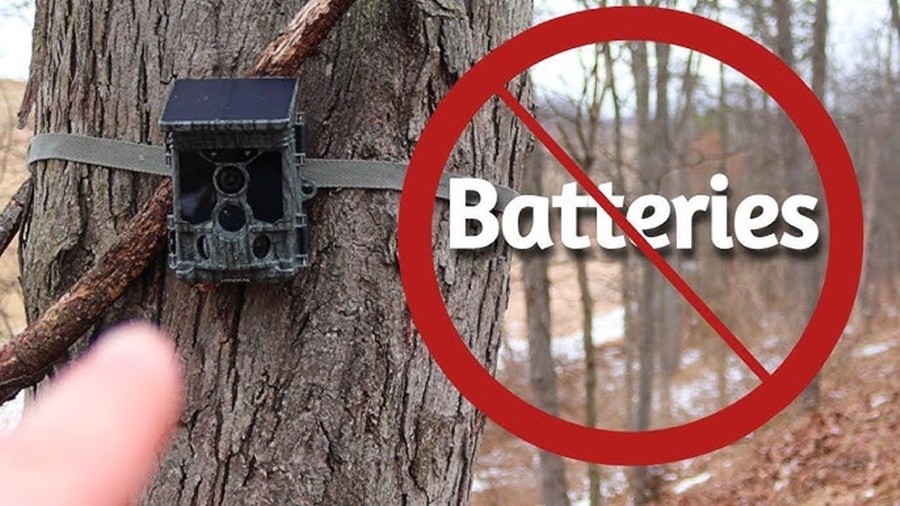
Solar-powered trail cameras can operate indefinitely with adequate sunlight, while battery-powered models last several months on high-quality AA batteries. Your choice hinges on usage: battery models offer portability and simplicity, while solar options provide sustainable energy but require a sunny location for optimal performance.
This guide breaks down both options in detail to help you make an informed decision.
What Is a Battery-Powered Trail Camera?
Battery-powered trail cameras rely on disposable or rechargeable batteries typically AA or lithium batteries to operate. These cameras are widely used because of their simplicity and availability.
Advantages of Battery-Powered Trail Cameras
1. Easy Setup and Use
Battery-powered cameras are plug-and-play. You simply insert batteries, mount the camera, and start recording.
2. Reliable in All Conditions
They function well in most environments, including shaded forests where sunlight is limited.
3. Portable and Flexible
Since they don’t rely on sunlight, you can place them anywhere dense woods, caves, or covered areas.
4. Lower Initial Cost
Battery-powered cameras are generally cheaper upfront compared to solar-powered systems.
Disadvantages of Battery-Powered Trail Cameras
1. Frequent Battery Replacement
Depending on usage, batteries may need to be replaced every few weeks or months.
2. Ongoing Costs
Constant battery replacement can become expensive over time.
3. Maintenance Required
You’ll need to physically access the camera often, which can be inconvenient in remote areas.
4. Environmental Impact
Disposable batteries contribute to waste unless you use rechargeable alternatives.
What Is a Solar-Powered Trail Camera?
Solar-powered trail cameras use a solar panel either built-in or external to recharge an internal battery. These cameras harness sunlight to extend operational time.
Advantages of Solar-Powered Trail Cameras
1. Long-Term Power Supply
As long as there is sufficient sunlight, the camera can run for extended periods without manual intervention.
2. Reduced Maintenance
Less need to visit the camera for battery changes, making it ideal for remote locations.
3. Cost-Effective Over Time
Although the upfront cost is higher, you save money by not constantly buying batteries.
4. Eco-Friendly Option
Solar energy reduces reliance on disposable batteries and lowers environmental impact.
Disadvantages of Solar-Powered Trail Cameras
1. Dependent on Sunlight
Performance drops in shaded areas, dense forests, or during cloudy weather.
2. Higher Initial Cost
Solar-powered models or add-on panels can be more expensive initially.
3. More Complex Setup
You may need to position the solar panel carefully for optimal sunlight exposure.
4. Bulkier Design
Solar panels can add size and weight to your setup.
Key Differences Between Battery and Solar Trail Cameras
| Feature | Battery-Powered | Solar-Powered |
|---|---|---|
| Power Source | Disposable/rechargeable batteries | Sunlight with rechargeable battery |
| Setup | Simple | Slightly more complex |
| Maintenance | Frequent | Minimal |
| Initial Cost | Lower | Higher |
| Long-Term Cost | Higher | Lower |
| Best Placement | Anywhere | Sun-exposed areas |
| Environmental Impact | Higher | Lower |
Which One Should You Choose?
Choose Battery-Powered If:
- You’re placing the camera in shaded or enclosed areas
- You need a simple, budget-friendly solution
- You don’t mind periodic maintenance
Choose Solar-Powered If:
- You want minimal maintenance and long-term deployment
- Your camera location gets good sunlight
- You prefer an eco-friendly and cost-efficient solution over time
Hybrid Option: Best of Both Worlds
Some trail cameras combine both battery and solar power. These systems use solar energy as the primary source while keeping batteries as backup. This ensures continuous operation even during low sunlight conditions.
Conclusion
There’s no one-size-fits-all answer when choosing between battery-powered and solar-powered trail cameras. If convenience and low upfront cost matter most, battery-powered models are a solid choice. However, if you’re planning long-term outdoor monitoring and want to reduce maintenance, solar-powered cameras offer significant advantages.
Ultimately, your decision should be based on your environment, budget, and how often you’re willing to maintain your equipment.