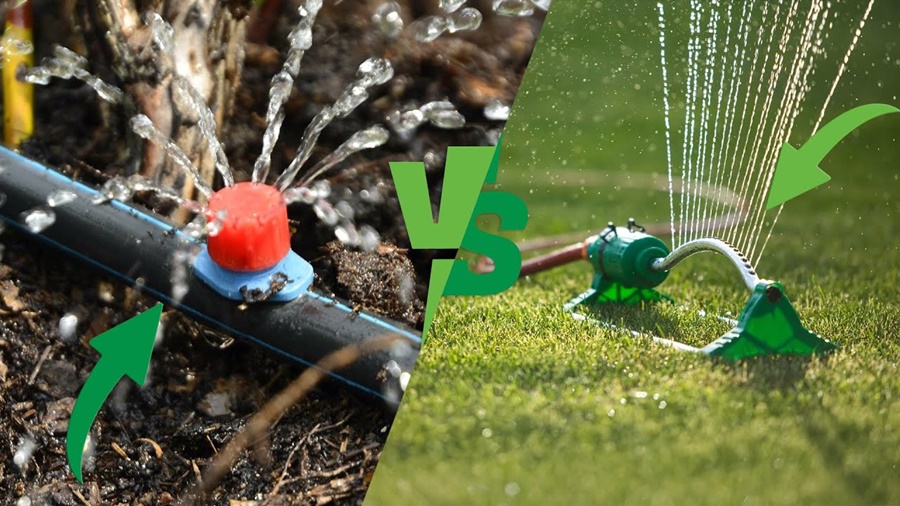
Drip irrigation can be 30-50% more water-efficient than sprinkler irrigation, as it delivers water directly to plant roots. This precision not only fosters healthier crop growth but also enhances productivity, making drip irrigation a favored choice among farmers. Understanding the design, operation, and cost differences between these two methods is crucial for selecting the most suitable system for specific crops and environments.
Understanding the differences between drip and sprinkler irrigation can help farmers, landscapers, and gardeners choose the most effective system for their specific needs. This article provides a detailed comparison of these two irrigation methods, including their working principles, advantages, disadvantages, and ideal applications.
What is Drip Irrigation?
Drip irrigation, also known as trickle irrigation, is a method that delivers water directly to the root zone of plants through a network of pipes, tubes, valves, and emitters. Water is released slowly and precisely, minimizing wastage and ensuring that plants receive the required amount of moisture.
This system is designed to provide water exactly where it is needed, reducing evaporation and runoff. Drip irrigation is commonly used in orchards, vineyards, vegetable farms, greenhouses, and home gardens.
Advantages of Drip Irrigation
1. High Water Efficiency
Drip irrigation can achieve water efficiency levels of up to 90–95% because water is delivered directly to plant roots.
2. Reduced Weed Growth
Since water is applied only near the crop, surrounding weeds receive less moisture, reducing their growth.
3. Lower Evaporation Losses
Minimal water is exposed to the atmosphere, resulting in significantly lower evaporation losses.
4. Improved Crop Yield
Consistent moisture levels help plants grow more uniformly, often leading to higher yields and better-quality produce.
5. Reduced Disease Risk
Keeping leaves dry helps prevent fungal diseases and other moisture-related plant problems.
6. Fertilizer Efficiency
Fertilizers can be delivered directly through the irrigation system, improving nutrient uptake and reducing wastage.
Disadvantages of Drip Irrigation
1. Higher Initial Cost
Installing drip irrigation systems can be expensive due to the required tubing, emitters, filters, and pressure regulators.
2. Maintenance Requirements
Emitters can become clogged by dirt, minerals, or algae, requiring regular inspection and cleaning.
3. Limited Coverage
Drip irrigation is best suited for row crops and individual plants rather than large areas of turf or grass.
4. Damage Risk
Pipes and tubing may be damaged by rodents, farm machinery, or exposure to sunlight over time.
What is Sprinkler Irrigation?
Sprinkler irrigation is a method that distributes water through a system of pipes and sprinkler heads that spray water into the air, simulating natural rainfall. Water is spread over a larger area, making it suitable for various crops and landscapes.
Sprinkler systems are commonly used in agricultural fields, lawns, parks, golf courses, and sports grounds.
Advantages of Sprinkler Irrigation
1. Uniform Water Distribution
Sprinklers can provide relatively even water coverage across large areas.
2. Suitable for Various Crops
This system can be used for many different crop types, including cereals, vegetables, and forage crops.
3. Easy Installation
Compared to some drip systems, sprinkler systems can be easier to install and expand.
4. Frost Protection
In certain conditions, sprinkler irrigation can help protect crops from frost damage.
5. Cooling Effect
Sprinklers can reduce plant temperature during extremely hot weather, helping prevent heat stress.
Disadvantages of Sprinkler Irrigation
1. Water Loss Through Evaporation
A significant amount of water may evaporate before reaching the soil, especially in hot and windy conditions.
2. Increased Weed Growth
Since the entire field receives water, weeds can thrive alongside crops.
3. Higher Energy Consumption
Sprinkler systems often require higher water pressure, increasing energy costs.
4. Disease Development
Wet foliage can encourage fungal and bacterial diseases in some crops.
5. Wind Interference
Strong winds can affect water distribution, leading to uneven irrigation.
Key Differences Between Drip and Sprinkler Irrigation
| Feature | Drip Irrigation | Sprinkler Irrigation |
|---|---|---|
| Water Delivery | Directly to roots | Sprayed over crops |
| Water Efficiency | Very high | Moderate |
| Evaporation Loss | Low | High |
| Weed Growth | Minimal | Higher |
| Initial Cost | Higher | Moderate |
| Operating Cost | Lower | Higher |
| Energy Requirement | Low | High |
| Disease Risk | Lower | Higher |
| Suitable Crops | Orchards, vegetables, vineyards | Field crops, lawns, pastures |
| Maintenance | Emitter cleaning required | Nozzle maintenance required |
Factors to Consider When Choosing an Irrigation System
1. Water Availability
If water resources are limited, drip irrigation is generally the better option because it conserves water more effectively.
2. Crop Type
High-value crops such as fruits, vegetables, and greenhouse plants benefit greatly from drip irrigation. Large field crops may be more suitable for sprinkler systems.
3. Soil Type
Drip irrigation performs well in sandy and uneven soils, while sprinkler systems can be effective across a variety of soil types.
4. Climate Conditions
In hot, dry, and windy regions, drip irrigation minimizes water loss. Sprinklers may be less efficient under such conditions.
5. Budget
Farmers with limited initial investment may prefer sprinkler systems, although long-term operating costs can be higher.
6. Farm Size
Large agricultural fields often use sprinkler systems for easier coverage, whereas smaller farms and specialized crops frequently utilize drip irrigation.
Environmental Impact
Drip irrigation is generally considered more environmentally friendly due to its ability to conserve water, reduce runoff, and minimize soil erosion. It also decreases nutrient leaching and reduces the likelihood of groundwater contamination.
Sprinkler irrigation can contribute to water wastage through evaporation and runoff if not managed properly. However, modern sprinkler technologies have improved efficiency significantly.
Conclusion
Both drip irrigation and sprinkler irrigation are valuable methods for supplying water to crops, but each has distinct advantages and limitations. Drip irrigation offers superior water efficiency, reduced weed growth, and improved crop health, making it ideal for high-value crops and water-scarce regions. On the other hand, sprinkler irrigation provides broader coverage and greater flexibility for large fields and various crop types.
The choice between the two systems depends on factors such as water availability, crop requirements, climate, soil conditions, and budget. By carefully evaluating these factors, farmers and gardeners can select the irrigation method that maximizes productivity while conserving valuable water resources.