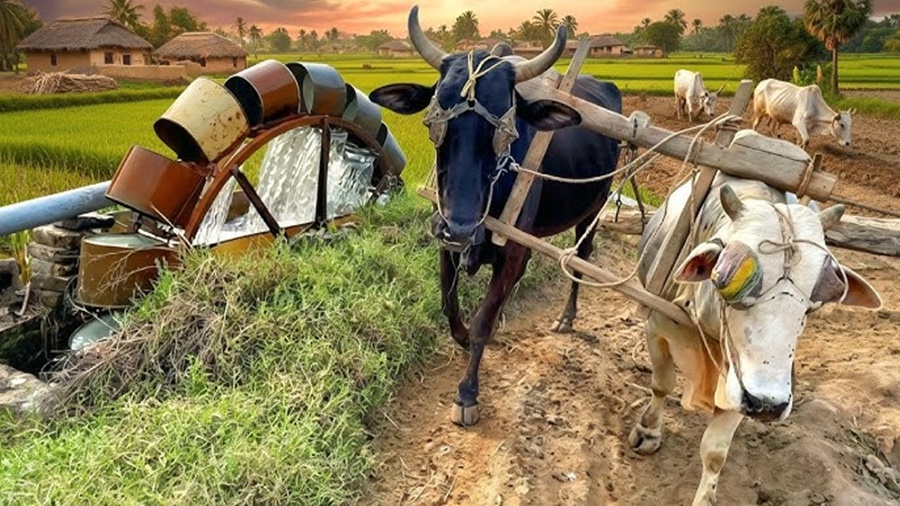
Smart irrigation systems can reduce water usage by up to 50% compared to traditional irrigation methods, making them a superior choice for enhancing agricultural efficiency and sustainability. Utilizing advanced technology for precise water management, these systems ensure optimal crop growth while conserving water. In contrast, traditional irrigation often employs less efficient practices, resulting in greater waste and lower productivity. This comparison underscores the crucial differences affecting both farming outcomes and water conservation efforts.
What is a Traditional Irrigation System?
A traditional irrigation system refers to conventional methods of supplying water to crops. These methods include surface irrigation, flood irrigation, furrow irrigation, and manual watering. In such systems, water is distributed according to a fixed schedule or based on the farmer’s judgment.
Traditional irrigation has been used for centuries and remains common in many parts of the world due to its simplicity and low initial cost. However, these systems often result in water wastage and inefficient resource utilization.
Features of Traditional Irrigation Systems
- Manual operation and monitoring
- Fixed watering schedules
- Dependence on farmer experience
- Limited use of technology
- Higher water consumption
- Lower installation costs
Advantages of Traditional Irrigation Systems
- Simple to operate and maintain.
- Requires minimal technical knowledge.
- Lower initial investment.
- Suitable for small-scale farming.
- Easy access to equipment and materials.
Disadvantages of Traditional Irrigation Systems
- Significant water wastage due to overwatering.
- Uneven water distribution across fields.
- Higher labor requirements.
- Increased operational costs over time.
- Difficulty in monitoring soil moisture and weather conditions.
- Lower water-use efficiency.
What is a Smart Irrigation System?
A smart irrigation system is an advanced watering solution that uses technology to optimize water usage. It incorporates sensors, weather data, automated controllers, and Internet of Things (IoT) devices to determine when and how much water crops need.
These systems continuously monitor soil moisture, temperature, humidity, rainfall, and other environmental factors. Based on collected data, irrigation is automatically adjusted to provide the right amount of water at the right time.
Features of Smart Irrigation Systems
- Automated operation
- Soil moisture sensors
- Weather monitoring integration
- Remote control through mobile applications
- Real-time data collection and analysis
- Efficient water management
- IoT and cloud-based technologies
Advantages of Smart Irrigation Systems
- Conserves water by preventing over-irrigation.
- Improves crop health and productivity.
- Reduces labor costs through automation.
- Provides precise water distribution.
- Enables remote monitoring and control.
- Reduces energy consumption.
- Supports sustainable farming practices.
Disadvantages of Smart Irrigation Systems
- Higher initial installation cost.
- Requires technical knowledge for setup and management.
- Dependence on electricity and internet connectivity.
- Maintenance of sensors and electronic components.
- Potential technical failures if not properly maintained.
Comparison Between Smart Irrigation and Traditional Irrigation
| Aspect | Smart Irrigation System | Traditional Irrigation System |
|---|---|---|
| Water Usage | Highly efficient | Often inefficient |
| Operation | Automated | Manual |
| Monitoring | Real-time monitoring | Limited monitoring |
| Labor Requirement | Low | High |
| Installation Cost | High | Low |
| Maintenance | Technical maintenance required | Simple maintenance |
| Crop Yield | Generally higher | Moderate |
| Water Conservation | Excellent | Limited |
| Energy Efficiency | High | Moderate |
| Decision Making | Data-driven | Experience-based |
Impact on Agriculture
Water Conservation
One of the biggest advantages of smart irrigation systems is water conservation. By applying water only when necessary, these systems significantly reduce wastage. Traditional irrigation methods often result in runoff, evaporation losses, and excessive watering.
Crop Productivity
Smart irrigation systems help maintain optimal soil moisture levels, leading to healthier crops and higher yields. Traditional methods may cause under-irrigation or over-irrigation, negatively affecting plant growth.
Cost Efficiency
Although smart irrigation systems require a higher initial investment, they often reduce long-term costs by lowering water consumption, labor expenses, and energy use. Traditional irrigation systems may appear economical initially but can become costly due to inefficient resource utilization.
Environmental Sustainability
Smart irrigation promotes sustainable agriculture by reducing water depletion and minimizing environmental impact. Traditional systems can contribute to water scarcity and soil degradation when not properly managed.
Applications of Smart Irrigation Systems
Smart irrigation systems are widely used in:
- Agricultural farms
- Greenhouses
- Residential gardens
- Parks and recreational areas
- Golf courses
- Commercial landscapes
These applications benefit from improved water management and reduced operational costs.
Future of Irrigation Technology
As technology continues to advance, smart irrigation systems are expected to become more affordable and accessible. Artificial Intelligence (AI), machine learning, and advanced sensor technologies will further improve irrigation efficiency. Governments and agricultural organizations are increasingly encouraging the adoption of smart irrigation to address global water scarcity and enhance food production.
Conclusion
Both smart irrigation systems and traditional irrigation systems serve the essential purpose of supplying water to crops. However, smart irrigation systems offer significant advantages in terms of water conservation, automation, crop productivity, and sustainability. While traditional irrigation remains useful for small-scale and low-budget farming operations, smart irrigation represents the future of modern agriculture. As water resources become increasingly limited, adopting intelligent irrigation technologies will play a vital role in ensuring efficient and sustainable agricultural practices worldwide.