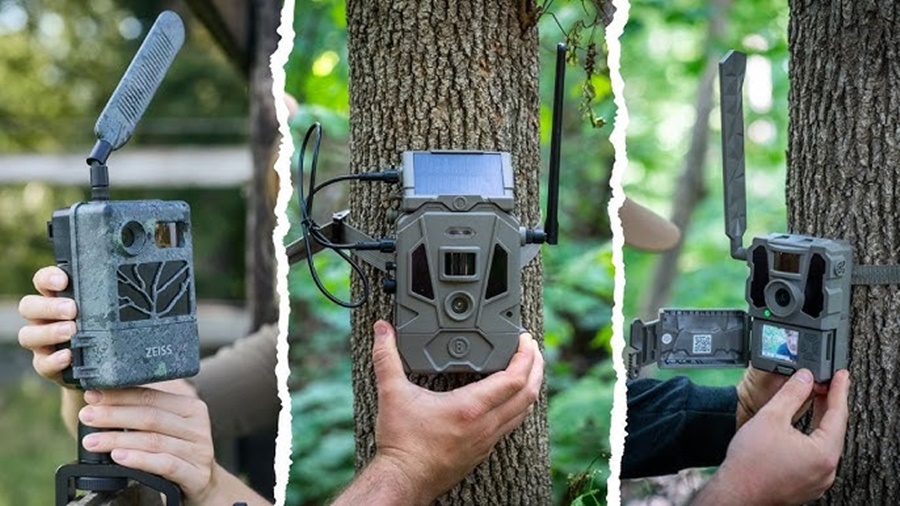
Cellular trail cameras offer immediate image transmission for wildlife monitoring, enhancing accessibility and convenience. While these models typically involve a service plan starting at about $5 per month, they provide faster alerts compared to non-cellular options, which require manual photo retrieval and more effort for data collection in the field.
This article provides a full, in-depth comparison of cellular vs non-cellular trail cameras, covering how they work, their pros and cons, and which one is best for your needs.
What Is a Trail Camera?
A trail camera is a motion-activated device designed to capture photos or videos when movement is detected. These cameras are typically placed outdoors to monitor wildlife or secure property without human presence.
Modern trail cameras fall into two main categories:
- Cellular trail cameras
- Non-cellular (traditional) trail cameras
What Is a Cellular Trail Camera?
A cellular trail camera uses a SIM card and connects to mobile networks (such as 4G LTE or 5G) to transmit images and videos directly to your smartphone or email.
How It Works
- Motion triggers the camera
- Photo/video is captured
- Data is sent through a cellular network
- You receive it instantly via an app or cloud service
Key Features
- Real-time alerts and updates
- Remote access from anywhere
- No need to physically visit the camera
What Is a Non-Cellular Trail Camera?
A non-cellular trail camera (also called a traditional trail camera) stores images and videos locally on an SD card.
How It Works
- Motion triggers the camera
- Photo/video is stored on internal memory or SD card
- You must physically retrieve the data
Key Features
- No internet or signal required
- Simple operation
- Reliable in remote locations
Key Differences Between Cellular and Non-Cellular Trail Cameras
1. Data Transmission
- Cellular: Sends images instantly via mobile networks
- Non-Cellular: Stores files locally for later retrieval
Cellular cameras provide convenience, while non-cellular cameras prioritize independence.
2. Remote Access
- Cellular: Full remote monitoring via mobile apps
- Non-Cellular: No remote access (unless using short-range Wi-Fi/Bluetooth)
If you want to monitor activity in real time, cellular is the clear winner.
3. Cost
Cellular Cameras
- Higher upfront price
- Require monthly data subscription
Non-Cellular Cameras
- Lower upfront cost
- No ongoing fees
Over time, non-cellular cameras are significantly more cost-effective.
4. Signal Dependence
- Cellular: Requires strong network coverage
- Non-Cellular: Works anywhere, even without signal
In areas with weak or no cellular service, non-cellular cameras are more reliable.
5. Battery Life
- Cellular: Shorter battery life due to data transmission
- Non-Cellular: Longer battery life and better efficiency
Cellular cameras consume more power because they continuously connect to networks.
6. Image and Video Quality
- Cellular: Often compresses images before sending
- Non-Cellular: Stores full-resolution images
Non-cellular cameras generally provide better image quality.
7. Ease of Use
- Cellular: Requires setup (SIM card, app, network configuration)
- Non-Cellular: Simple plug-and-play with SD card
Non-cellular cameras are easier for beginners.
Pros and Cons
Cellular Trail Camera
Advantages
- Real-time monitoring and alerts
- Remote access from anywhere
- Ideal for security and surveillance
- Reduces need for physical visits
Disadvantages
- Monthly subscription fees
- Dependent on signal strength
- Higher battery usage
- More complex setup
Non-Cellular Trail Camera
Advantages
- No ongoing costs
- Works without network coverage
- Longer battery life
- Better image quality
- More reliable in harsh conditions
Disadvantages
- No real-time updates
- Requires physical retrieval of data
- Less convenient for remote monitoring
Real-World Use Cases
Choose a Cellular Trail Camera If:
- You want live updates on wildlife or intruders
- You monitor remote property or farms
- You cannot visit the camera frequently
- You need instant alerts for security purposes
Choose a Non-Cellular Trail Camera If:
- You are working in remote areas with no signal
- You want a budget-friendly option
- You prefer high-quality images and longer battery life
- You don’t need real-time access
Practical Insights from Users
Many experienced users highlight a trade-off between convenience and reliability. For example, some report that non-cellular cameras often produce better-quality images and perform more consistently in low-signal areas, while cellular cameras can struggle without strong coverage.
Which One Should You Choose?
There is no universal “best” option—it depends entirely on your situation.
- If convenience and real-time monitoring matter most → go cellular
- If reliability, cost, and simplicity matter most → go non-cellular
A common strategy is to use both:
- Cellular cameras for key monitoring spots
- Non-cellular cameras for broader coverage
Conclusion
Choosing between a cellular and a non-cellular trail camera ultimately comes down to your priorities. If you value real-time updates, remote access, and convenience, a cellular trail camera is the better choice especially for security or monitoring locations you can’t visit often. On the other hand, if you prefer reliability, lower costs, longer battery life, and independence from network coverage, a non-cellular trail camera is the more practical option.
There is no one-size-fits-all solution. The right decision depends on your environment, budget, and how you plan to use the camera. For many users, a combination of both types can offer the best balance using cellular cameras for instant alerts and non-cellular cameras for consistent, long-term monitoring.
In the end, understanding your specific needs will help you choose a trail camera that delivers the performance and value you expect.