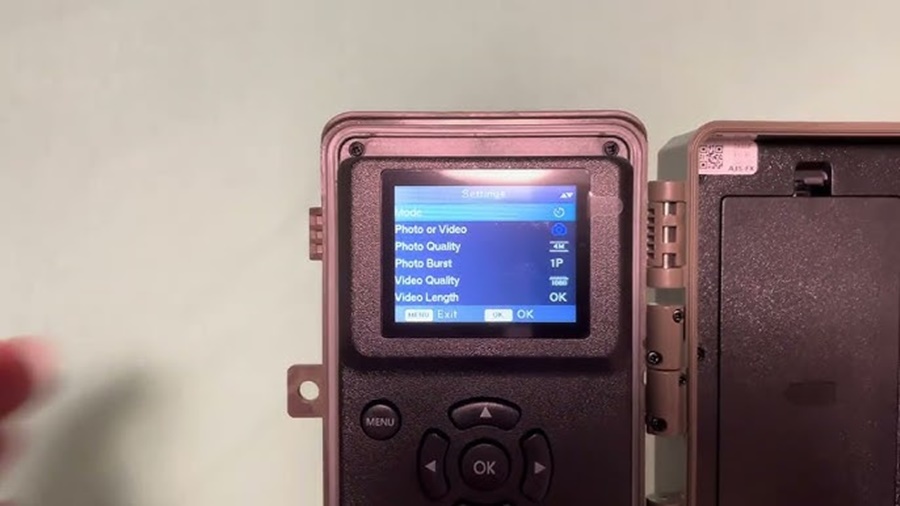
A trail camera with a motion sensor excels in capturing wildlife activity, triggering images upon detecting movement, whereas a time-lapse camera, which takes pictures at intervals (often as frequent as every few seconds), is ideal for monitoring slow changes like plant maturation. Understanding these distinct functionalities helps users effectively tailor their camera choice to their specific observation goals.
This article breaks down both modes in detail, compares their strengths and limitations, and helps you decide which one fits your needs.
Understanding Motion Sensor Mode
Motion sensor mode is the most commonly used setting on trail cameras. It relies on a Passive Infrared (PIR) sensor to detect movement and heat changes within its detection zone.
How It Works
When an animal or person passes in front of the camera, the PIR sensor detects a difference in temperature between the subject and the surrounding environment. This triggers the camera to capture photos or videos automatically.
Advantages
1. Efficient Storage Use
The camera only records when something is happening, so you don’t waste memory on empty frames.
2. Battery Conservation
Since it activates only when triggered, it uses less power compared to constant shooting modes.
3. Captures Key Moments
You get footage specifically when animals or people are present, making it ideal for tracking movement patterns.
4. Ideal for Game Trails
Perfect for narrow paths, feeding areas, or locations where animals are expected to pass within a defined zone.
Disadvantages
1. Missed Activity
If the subject moves too fast or outside the sensor range, the camera might not trigger in time.
2. False Triggers
Wind-blown vegetation, sunlight shifts, or small animals can sometimes activate the sensor unnecessarily.
3. Limited Coverage Area
The detection zone is narrower than the camera’s field of view, meaning activity outside that zone goes unrecorded.
Understanding Time-Lapse Mode
Time-lapse mode works differently. Instead of reacting to motion, the camera takes photos at fixed intervals, regardless of activity.
How It Works
You set a specific interval such as every 10 seconds, 1 minute, or 5 minutes and the camera captures images continuously during a defined time period.
Advantages
1. Wide-Area Monitoring
Covers large open spaces where animals might be too far away to trigger motion sensors.
2. No Missed Events
Because it shoots regularly, it captures activity even if there’s no motion trigger.
3. Great for Patterns and Behavior Studies
Useful for observing feeding habits, migration timing, or general movement trends over time.
4. Effective in Open Terrain
Works well in fields, waterholes, or large landscapes where motion detection is less reliable.
Disadvantages
1. High Storage Consumption
Captures many images, including empty frames, which can quickly fill memory cards.
2. Increased Battery Drain
Frequent image capture uses significantly more power.
3. Time-Consuming Review
You may need to sift through hundreds or thousands of images to find relevant activity.
4. Less Precision
Unlike motion mode, it doesn’t prioritize important moments—it records everything equally.
Key Differences at a Glance
| Feature | Motion Sensor Mode | Time-Lapse Mode |
|---|---|---|
| Trigger Mechanism | Heat and movement detection | Fixed time intervals |
| Battery Usage | Low | High |
| Storage Efficiency | High | Low |
| Coverage Area | Limited detection zone | Wide field of view |
| Missed Activity Risk | Possible | Minimal |
| Best Use Case | Trails, paths, targeted zones | Open areas, large landscapes |
When to Use Motion Sensor Mode
Choose motion sensor mode if:
- You are monitoring animal trails or feeding spots
- You want to conserve battery and storage
- You need specific, event-based captures
- You are tracking individual animals or intruders
This mode is ideal for hunters and security purposes where capturing precise moments matters.
When to Use Time-Lapse Mode
Choose time-lapse mode if:
- You are observing large open areas
- You want to study behavior patterns over time
- Motion detection may fail due to distance or environmental conditions
- You need continuous monitoring
Researchers and land managers often prefer this mode for broader environmental observation.
Using Both Modes Together
Many modern trail cameras allow a hybrid setup, combining motion sensor and time-lapse modes. This can be extremely effective.
Benefits of Combining Modes
- Motion mode captures close, detailed activity
- Time-lapse fills in gaps for distant or missed movement
- Provides a complete picture of the environment
For example, you could use time-lapse during daylight hours and motion detection at night.
Conclusion
Choosing between motion sensor and time-lapse modes depends entirely on your goals and the environment you’re working in.
- If you want efficiency and targeted captures, go with motion sensor mode.
- If you need comprehensive coverage and pattern analysis, time-lapse is the better option.
- If possible, combine both for maximum effectiveness.
Understanding these differences ensures you get the most out of your trail camera, whether you’re tracking wildlife, securing property, or studying nature.