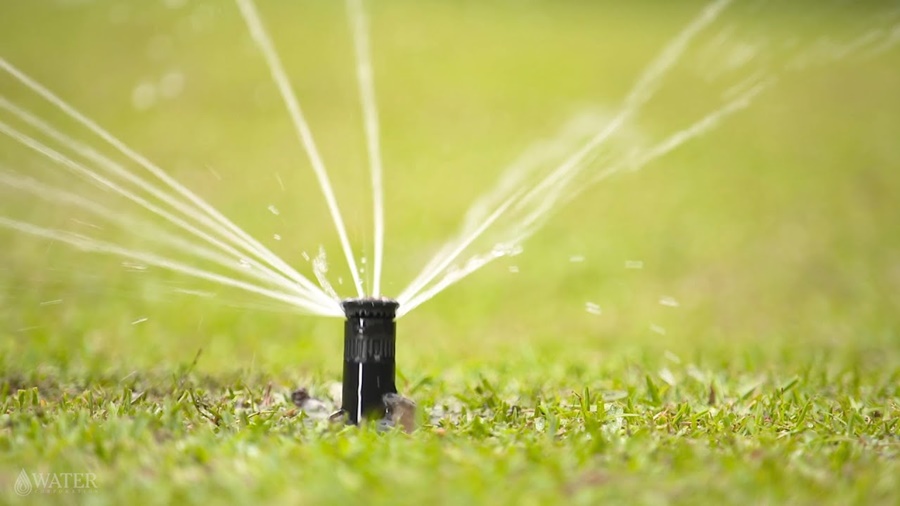
Rotor sprinklers are optimal for large areas, delivering efficient water coverage across 20 to 50 feet, whereas spray sprinklers excel in smaller, dense gardens with a reach of just 10 to 15 feet. Recognizing these distinctions enables homeowners and landscapers to choose the best irrigation solution tailored to their landscape needs, promoting a healthy and vibrant lawn.
What Are Rotor Sprinklers?
Rotor sprinklers are irrigation devices that distribute water through one or more rotating streams. Instead of spraying water continuously over a fixed area, rotor heads slowly rotate and cover large sections of a lawn over time.
Rotor sprinklers are commonly used in medium to large lawns because they can throw water over longer distances, often ranging from 15 to 75 feet or more depending on the model. The slow application rate allows water to soak into the soil gradually, reducing runoff and improving water efficiency.
Advantages of Rotor Sprinklers
1. Greater Coverage Area
Rotor sprinklers can irrigate larger areas with fewer sprinkler heads. This reduces installation costs and simplifies system design.
2. Improved Water Efficiency
The slower water application rate minimizes runoff and allows water to penetrate deeper into the soil.
3. Reduced Water Waste
Because rotor sprinklers produce larger water droplets, they are less susceptible to wind drift compared to spray sprinklers.
4. Ideal for Large Lawns
Large residential properties, parks, sports fields, and commercial landscapes often benefit from rotor systems.
Disadvantages of Rotor Sprinklers
1. Longer Watering Times
Since rotor sprinklers apply water slowly, they generally require longer run times to deliver the same amount of water.
2. Higher Initial Cost
Rotor heads are usually more expensive than spray heads.
3. Less Effective for Small Areas
Using rotor sprinklers in small or irregularly shaped landscapes may result in uneven coverage.
What Are Spray Sprinklers?
Spray sprinklers distribute water in a fixed fan-shaped pattern. They release water continuously across a designated area and do not rotate during operation.
Spray heads are typically designed for smaller spaces and can cover distances ranging from 5 to 15 feet. Their quick water application makes them suitable for compact lawns, flower beds, and landscaped areas.
Advantages of Spray Sprinklers
1. Fast Water Application
Spray heads deliver water at a higher precipitation rate, allowing areas to receive the required amount of water in less time.
2. Excellent for Small Areas
They provide precise coverage for small lawns, garden beds, and narrow landscape sections.
3. Lower Equipment Cost
Spray sprinkler heads are generally less expensive to purchase and install.
4. Easy Adjustment
Many spray heads can be adjusted to cover specific angles, making them useful for irregularly shaped spaces.
Disadvantages of Spray Sprinklers
1. Higher Risk of Runoff
The fast application rate can overwhelm certain soil types, causing water runoff and waste.
2. Greater Wind Sensitivity
The fine mist produced by spray heads can be carried away by wind, reducing irrigation efficiency.
3. More Sprinkler Heads Required
Large areas typically need numerous spray heads to achieve full coverage.
Key Differences Between Rotor and Spray Sprinklers
| Feature | Rotor Sprinklers | Spray Sprinklers |
|---|---|---|
| Water Delivery | Rotating streams | Fixed spray pattern |
| Coverage Distance | 15–75+ feet | 5–15 feet |
| Water Application Rate | Low | High |
| Water Efficiency | Higher | Moderate |
| Wind Resistance | Better | Lower |
| Installation Cost | Higher | Lower |
| Number of Heads Needed | Fewer | More |
| Best Use | Large lawns | Small lawns and beds |
Which Sprinkler Type Uses Less Water?
Rotor sprinklers are generally more water-efficient because they apply water slowly and evenly. This slower application allows moisture to penetrate the soil rather than running off the surface.
However, water efficiency depends on proper system design and scheduling. A well-designed spray system can still operate efficiently when matched to the landscape and soil conditions.
Best Applications for Rotor Sprinklers
Rotor sprinklers are ideal for:
- Large residential lawns
- Sports fields
- Golf courses
- Commercial landscapes
- Areas with moderate to high wind exposure
- Landscapes requiring deep watering
Their ability to cover large distances makes them a practical choice where minimizing the number of sprinkler heads is important.
Best Applications for Spray Sprinklers
Spray sprinklers are best suited for:
- Small residential lawns
- Flower beds
- Shrub areas
- Narrow strips of landscaping
- Irregularly shaped planting zones
- Landscapes with short watering cycles
They provide accurate coverage in spaces where rotor sprinklers may overshoot or waste water.
Can Rotor and Spray Sprinklers Be Used Together?
While rotor and spray sprinklers can be installed within the same irrigation system, they should generally not be placed on the same watering zone. Because they apply water at different rates, combining them on a single zone can lead to overwatering in some areas and underwatering in others.
The recommended approach is to place rotor heads on one zone and spray heads on separate zones, allowing each type to operate according to its specific watering requirements.
Maintenance Considerations
Both sprinkler types require regular maintenance to ensure optimal performance.
Rotor Sprinkler Maintenance
- Check for proper rotation.
- Clean clogged nozzles.
- Adjust spray arcs as needed.
- Inspect seals and risers for leaks.
Spray Sprinkler Maintenance
- Remove debris from nozzles.
- Correct tilted or damaged heads.
- Replace worn components.
- Ensure spray patterns remain unobstructed.
Routine inspections help prevent water waste and maintain uniform coverage.
Conclusion
Choosing between rotor sprinklers and spray sprinklers depends largely on the size and layout of your landscape. Rotor sprinklers excel in large open areas where water efficiency and long-range coverage are priorities. Spray sprinklers perform best in smaller spaces that require precise and rapid watering.
For many properties, the most effective irrigation system combines both sprinkler types in separate zones. By matching the right sprinkler to the right area, homeowners can achieve healthier lawns, lower water bills, and more efficient irrigation performance.
Ultimately, understanding the strengths and limitations of each sprinkler type will help you make an informed decision and create a more sustainable watering system for your landscape.