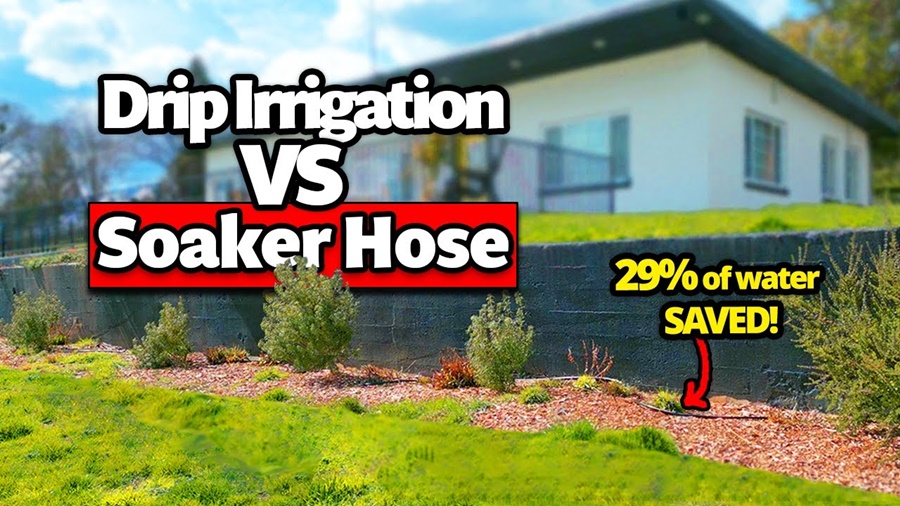
Soaker hoses are best for small gardens, delivering water directly to the soil through porous materials, while drip irrigation systems, featuring a network of tubing and emitters, excel in larger areas. Both methods reduce water waste, but soaker hoses offer simplicity in smaller spaces, whereas drip irrigation provides efficient, targeted watering for expansive landscapes.
This article explores the differences between soaker hoses and drip irrigation systems to help you choose the best option for your garden.
What Is a Soaker Hose?
A soaker hose is a porous hose made from recycled rubber or other materials that slowly releases water along its entire length. When connected to a water source, the hose “sweats” water directly into the surrounding soil.
Soaker hoses are typically laid on the ground surface or covered with mulch to reduce evaporation. They are commonly used in vegetable gardens, flower beds, and landscaped areas.
Advantages of Soaker Hoses
1. Easy Installation
Soaker hoses are simple to install. Most gardeners can set them up within minutes without specialized tools or technical knowledge.
2. Affordable
They are generally less expensive than drip irrigation systems, making them an attractive choice for gardeners on a budget.
3. Good for Continuous Plant Rows
Soaker hoses work well in gardens where plants are arranged in long rows, such as vegetable beds.
4. Reduced Water Waste
Because water seeps directly into the soil, less water is lost through evaporation compared to overhead sprinklers.
Disadvantages of Soaker Hoses
1. Uneven Water Distribution
Water pressure can vary throughout the hose length, causing plants near the water source to receive more water than those farther away.
2. Limited Flexibility
It can be difficult to customize water delivery for individual plants with different watering needs.
3. Shorter Lifespan
Soaker hoses may crack, clog, or deteriorate over time, especially when exposed to sunlight and harsh weather.
4. Less Efficient for Large Gardens
Large or complex garden layouts can make soaker hoses difficult to manage effectively.
What Is Drip Irrigation?
Drip irrigation is a system of tubing, emitters, connectors, and valves that delivers water directly to the root zone of individual plants. Water drips slowly through emitters placed at specific locations, ensuring precise watering.
Drip systems can be installed above ground or underground and are commonly used in home gardens, commercial farms, orchards, and landscaping projects.
Advantages of Drip Irrigation
1. High Water Efficiency
Drip irrigation is one of the most efficient watering methods available, often reducing water use by 30% to 60% compared to traditional irrigation methods.
2. Precise Water Delivery
Each plant can receive the exact amount of water it needs, improving plant health and reducing waste.
3. Customizable Design
The system can be tailored to different garden sizes, plant spacing, and watering requirements.
4. Reduced Weed Growth
Since water is applied only where needed, fewer weeds germinate in dry areas between plants.
5. Automation Capability
Drip systems can easily be connected to timers and smart controllers for automated watering schedules.
Disadvantages of Drip Irrigation
1. Higher Initial Cost
The components required for a drip system make it more expensive than a simple soaker hose setup.
2. More Complex Installation
Designing and installing a drip irrigation system requires more planning and effort.
3. Maintenance Requirements
Emitters can clog due to dirt, mineral deposits, or debris, requiring periodic inspection and cleaning.
4. Learning Curve
Beginners may need time to understand pressure regulators, filters, tubing layouts, and emitter placement.
Key Differences Between Soaker Hose and Drip Irrigation
| Feature | Soaker Hose | Drip Irrigation |
|---|---|---|
| Cost | Lower | Higher |
| Installation | Very easy | Moderate |
| Water Efficiency | Good | Excellent |
| Water Distribution | Less precise | Highly precise |
| Flexibility | Limited | Highly customizable |
| Maintenance | Moderate | Moderate to high |
| Lifespan | Shorter | Longer |
| Automation | Possible | Excellent |
| Best For | Small gardens and rows | Large, diverse, and permanent gardens |
Which System Saves More Water?
Drip irrigation is generally the winner when it comes to water conservation. Because emitters release water directly at the root zone, almost every drop is used efficiently. Soaker hoses are still water-efficient compared to sprinklers, but they typically lose more water through uneven distribution and seepage.
In regions facing water restrictions or drought conditions, drip irrigation often provides the greatest long-term savings.
Best Uses for Soaker Hoses
A soaker hose may be the best choice if you:
- Have a small vegetable garden.
- Need a low-cost irrigation solution.
- Want quick and easy installation.
- Grow plants in straight rows.
- Do not require highly precise watering.
Best Uses for Drip Irrigation
Drip irrigation is ideal if you:
- Have a large garden or landscape.
- Grow a variety of plants with different water needs.
- Want maximum water efficiency.
- Prefer automated watering schedules.
- Need a long-term irrigation solution.
Maintenance Tips
For Soaker Hoses
- Flush the hose regularly to remove debris.
- Use a pressure regulator to prevent damage.
- Cover with mulch for better efficiency.
- Store indoors during freezing weather.
For Drip Irrigation
- Install a filter to prevent clogging.
- Inspect emitters periodically.
- Flush the system several times per season.
- Check tubing for leaks or damage.
- Replace clogged emitters when necessary.
Cost Comparison
For a small garden, a soaker hose system may cost significantly less than a drip irrigation setup. However, drip irrigation often provides better long-term value because of improved durability, water savings, and plant performance.
While the initial investment is higher, many gardeners recover the cost through lower water bills and healthier crops.
Conclusion
Both soaker hoses and drip irrigation systems are effective alternatives to traditional sprinklers. The right choice depends on your garden size, budget, and watering goals.
Choose a soaker hose if you want a simple, inexpensive solution for small garden beds and vegetable rows. Choose drip irrigation if you need maximum efficiency, precise water control, and a scalable system for larger or more diverse landscapes.
For most gardeners seeking the best long-term performance and water conservation, drip irrigation is generally the superior option. However, for beginners or those with smaller gardens, a soaker hose remains a practical and cost-effective choice.