Drip irrigation can reduce water usage by up to 60% compared to surface irrigation, making it the top choice for efficient water management in agriculture. As water scarcity intensifies and demand for crops rises, selecting the appropriate irrigation method becomes crucial for optimizing yields and minimizing waste. Each system has its unique benefits and drawbacks that cater to different farming conditions, underscoring the importance of recognizing their differences.
This article compares surface irrigation and drip irrigation in terms of their working principles, efficiency, costs, benefits, and limitations.
What is Surface Irrigation?
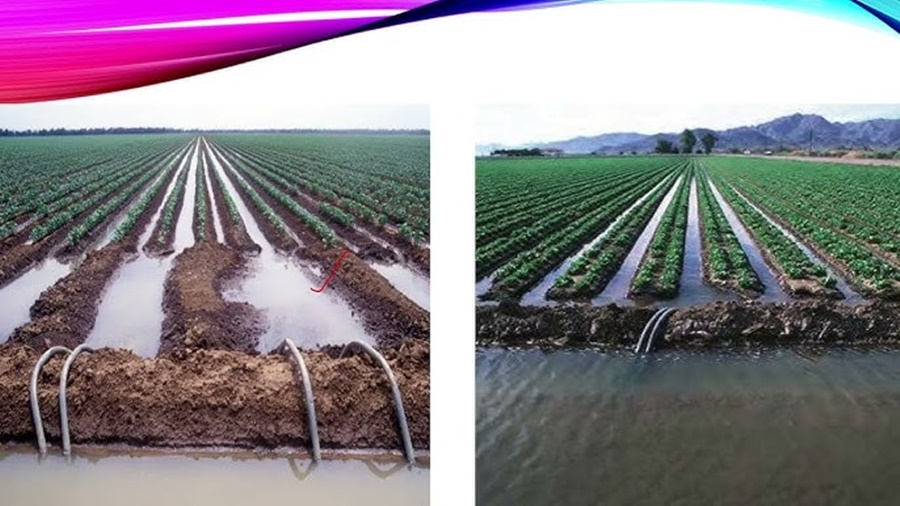
Surface irrigation is one of the oldest and most common methods of irrigation. In this system, water flows over the soil surface by gravity and spreads across the field. The water infiltrates the soil and reaches the plant roots naturally.
Common types of surface irrigation include:
- Flood irrigation
- Furrow irrigation
- Basin irrigation
- Border irrigation
Surface irrigation is widely used in areas where water is readily available and the land is relatively level.
Advantages of Surface Irrigation
- Low Initial Cost
- Surface irrigation systems are generally inexpensive to install because they require minimal equipment.
- Simple Operation
- Farmers can easily manage and operate the system without advanced technical knowledge.
- Suitable for Large Fields
- It is effective for irrigating large agricultural areas, especially grain crops.
- Low Energy Requirements
- Water movement is primarily driven by gravity, reducing the need for pumps and electricity.
Disadvantages of Surface Irrigation
- Water Wastage
- Significant water losses occur through evaporation, runoff, and deep percolation.
- Uneven Water Distribution
- Some areas may receive too much water while others receive too little.
- Soil Erosion
- Excessive water flow can wash away topsoil and nutrients.
- Weed Growth
- Large wet areas encourage weed development.
- Labor Intensive
- Continuous monitoring and field preparation are often required.
What is Drip Irrigation?
Drip irrigation is a modern irrigation technique that delivers water directly to the root zone of plants through a network of pipes, tubes, emitters, and valves. Water is applied slowly and precisely, reducing losses and improving efficiency.
This system is commonly used for orchards, vegetable crops, greenhouses, vineyards, and high-value agricultural production.
Advantages of Drip Irrigation
- High Water Efficiency
- Drip irrigation can achieve water-use efficiencies of over 90%, significantly reducing wastage.
- Uniform Water Distribution
- Water is delivered directly to each plant, ensuring consistent moisture levels.
- Reduced Weed Growth
- Since only the root zone is watered, weeds receive less moisture.
- Improved Crop Yield
- Precise watering promotes healthier plant growth and higher productivity.
- Fertilizer Efficiency
- Fertilizers can be applied through the irrigation system, improving nutrient uptake.
- Suitable for Water-Scarce Regions
- It is highly effective in areas facing water shortages.
Disadvantages of Drip Irrigation
- High Initial Investment
- Installation costs are significantly higher than surface irrigation.
- Maintenance Requirements
- Emitters and pipes can become clogged and require regular cleaning.
- Technical Knowledge Needed
- Proper design and management are necessary for optimal performance.
- Damage Risk
- Pipes and tubes can be damaged by rodents, farm machinery, or environmental factors.
Comparison Between Surface Irrigation and Drip Irrigation
| Feature | Surface Irrigation | Drip Irrigation |
|---|---|---|
| Water Efficiency | Low to Moderate | Very High |
| Initial Cost | Low | High |
| Operating Cost | Low | Moderate |
| Water Distribution | Less Uniform | Highly Uniform |
| Labor Requirement | High | Low |
| Weed Growth | Higher | Lower |
| Soil Erosion | Possible | Minimal |
| Fertilizer Efficiency | Lower | Higher |
| Maintenance | Simple | More Complex |
| Suitability for Water Scarcity | Poor | Excellent |
Environmental Impact
Surface irrigation often results in excessive water consumption and nutrient runoff, which can contribute to soil degradation and water pollution. In contrast, drip irrigation conserves water, reduces nutrient leaching, and minimizes environmental impacts. As sustainable agriculture becomes more important, drip irrigation is increasingly preferred for environmentally responsible farming.
Economic Considerations
The choice between surface and drip irrigation often depends on farm size, crop type, and available financial resources. Small-scale farmers with limited budgets may prefer surface irrigation due to its lower installation costs. However, the long-term savings in water, fertilizers, and labor often make drip irrigation more economically beneficial over time, especially for high-value crops.
Suitable Applications
Surface Irrigation is Best For:
- Rice cultivation
- Wheat fields
- Large grain farms
- Areas with abundant water supply
- Flat or gently sloping land
Drip Irrigation is Best For:
- Fruit orchards
- Vegetable production
- Vineyards
- Greenhouse farming
- Water-scarce regions
- High-value crops
Conclusion
Both surface irrigation and drip irrigation play important roles in agriculture. Surface irrigation remains popular because of its simplicity and low installation cost, making it suitable for large-scale field crops and regions with plentiful water supplies. However, it is generally less efficient and can lead to significant water losses.
Drip irrigation, on the other hand, offers superior water efficiency, precise water application, and improved crop productivity. Although the initial investment is higher, its long-term benefits often outweigh the costs, particularly in areas facing water scarcity.
The choice between these two irrigation methods should be based on factors such as crop type, water availability, land characteristics, and economic considerations. As global water resources become more limited, drip irrigation is increasingly recognized as a sustainable solution for modern agriculture.