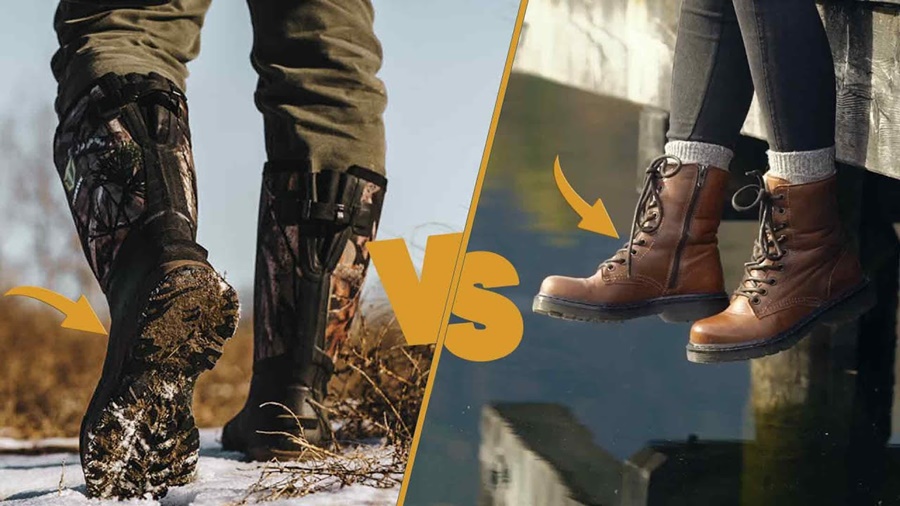
Hunting boots, typically weighing between 3-5 pounds, are designed for rugged terrains and stealth, making them ideal for environments where concealment is essential. Conversely, hiking boots focus on comfort and breathability for long hikes, averaging 2-3 pounds per pair. Each boot is tailored to meet the specific demands of outdoor activities, ensuring optimal performance in their respective environments.
Choosing the wrong pair can lead to discomfort, fatigue, poor performance, and even safety issues in the wilderness. Whether you are planning a hunting expedition deep in the woods or preparing for a mountain hiking adventure, understanding the differences between hunting boots and hiking boots is essential.
This article explores the key distinctions between hunting boots and hiking boots, including design, comfort, durability, insulation, weight, traction, waterproofing, and ideal use cases.
What Are Hunting Boots?
Hunting boots are specialized footwear designed for hunters who spend long hours outdoors in rugged, wet, cold, or uneven terrain. These boots prioritize durability, protection, camouflage, and weather resistance.
Hunters often move through forests, swamps, rocky landscapes, and muddy fields while carrying heavy gear. As a result, hunting boots are built to withstand harsh conditions and provide stability for extended periods.
Key Features of Hunting Boots
Heavy-Duty Construction
Hunting boots are usually made with thick leather, reinforced stitching, and highly durable materials. They are designed to handle rough terrain and resist wear and tear.
Insulation
Many hunting boots include insulation to keep feet warm during cold-weather hunts. Insulation levels vary depending on the climate and hunting season.
Waterproof Protection
Hunters frequently cross streams, wet grass, mud, and snow. Waterproof membranes are common in hunting boots to keep feet dry.
High Ankle Support
Because hunters often carry backpacks, rifles, or equipment, hunting boots provide strong ankle support for stability and injury prevention.
Camouflage and Quiet Movement
Some hunting boots are designed with camouflage patterns and quieter materials that reduce noise while stalking animals.
What Are Hiking Boots?
Hiking boots are designed specifically for walking long distances on trails, mountains, and outdoor paths. Their primary focus is comfort, flexibility, breathability, and efficient movement.
Hikers usually prioritize lightweight performance because they may walk for many hours or multiple days continuously.
Key Features of Hiking Boots
Lightweight Design
Hiking boots are generally lighter than hunting boots to reduce fatigue during long hikes.
Flexibility
These boots allow natural foot movement and are more flexible for walking comfort.
Breathability
Hiking boots often include mesh panels and breathable materials to keep feet cool during physical activity.
Cushioning and Comfort
Manufacturers prioritize shock absorption and cushioning to support continuous movement over long distances.
Moderate Waterproofing
Many hiking boots are water-resistant or waterproof, but they are usually optimized for trail use rather than extreme wet conditions.
Main Differences Between Hunting Boots and Hiking Boots
Although both boots are built for outdoor use, they differ significantly in several areas.
1. Purpose and Activity
Hunting Boots
Designed for:
- Hunting in forests, wetlands, snow, and rough environments
- Standing for long periods
- Carrying heavy equipment
- Cold-weather conditions
Hiking Boots
Designed for:
- Walking long distances
- Mountain trails and trekking
- Fast movement
- Comfort during extended hikes
The intended activity is the biggest difference between the two.
2. Weight
One of the most noticeable differences is weight.
Hunting Boots
- Heavier construction
- Thicker materials
- More protective layers
- Added insulation
Hiking Boots
- Lightweight materials
- Designed to reduce leg fatigue
- Better for speed and endurance
Heavy hunting boots may become uncomfortable during long hikes, while lightweight hiking boots may not provide enough protection for hunting environments.
3. Insulation and Warmth
Hunting Boots
Insulation is common because hunters may remain stationary for long periods in cold weather.
Typical insulation ranges include:
- 200 grams for mild cold
- 400–800 grams for winter hunting
- 1000+ grams for extreme cold
Hiking Boots
Most hiking boots have little or no insulation because hiking naturally generates body heat.
Too much insulation during hiking can cause overheating and sweaty feet.
4. Comfort and Flexibility
Hiking Boots
Hiking boots prioritize:
- Flexible midsoles
- Cushioning
- Natural movement
- Reduced fatigue
These features improve comfort on long-distance trails.
Hunting Boots
Hunting boots are often:
- Stiffer
- More rugged
- Less flexible
This stiffness improves protection and support but can reduce walking comfort.
5. Durability
Hunting Boots
Built to survive:
- Thick brush
- Mud
- Sharp rocks
- Harsh weather
- Heavy loads
Durability is a major strength of hunting boots.
Hiking Boots
While durable, hiking boots are optimized more for mobility than extreme ruggedness.
Lightweight materials may wear out faster under harsh hunting conditions.
6. Waterproofing
Hunting Boots
Waterproofing is usually more aggressive because hunters often encounter:
- Wet grass
- Marshes
- Streams
- Snow
Some hunting boots even extend high up the calf for additional protection.
Hiking Boots
Many hiking boots are waterproof, but they usually focus on balancing water resistance with breathability.
Excessive waterproofing can trap heat during strenuous hikes.
7. Traction and Soles
Hunting Boots
Soles are designed for:
- Mud
- Slippery terrain
- Uneven forests
- Off-trail environments
The tread is often deeper and more aggressive.
Hiking Boots
Hiking boot soles are optimized for:
- Trails
- Rocks
- Mountain terrain
- Consistent walking grip
They usually provide smoother walking efficiency.
8. Noise Levels
Hunters often need stealth.
Hunting Boots
Designed to reduce noise while walking through woods and brush.
Hiking Boots
Noise reduction is generally not a design priority.
Can You Use Hunting Boots for Hiking?
Yes, but there are trade-offs.
Advantages
- Excellent protection
- Superior waterproofing
- Great ankle support
- Better performance in cold conditions
Disadvantages
- Heavier weight
- Less breathable
- More fatigue on long hikes
- Reduced flexibility
Short hikes in rough terrain may work well with hunting boots, but they are not ideal for long-distance trekking.
Can You Use Hiking Boots for Hunting?
Sometimes, yes.
Advantages
- Lightweight comfort
- Better breathability
- Easier movement
- Less fatigue
Disadvantages
- Less insulation
- Reduced durability
- Weaker protection in harsh environments
- Less support for heavy gear
Hiking boots can work for warm-weather hunting or light scouting trips but may struggle in demanding hunting environments.
Which Boots Are Better for Cold Weather?
Hunting boots are generally better for cold weather because they include:
- Thick insulation
- Better waterproofing
- Stronger weather protection
Hiking boots are usually better suited for moderate temperatures and active movement.
Which Boots Are Better for Long Walks?
Hiking boots are typically superior for long-distance walking because they:
- Weigh less
- Offer better flexibility
- Reduce fatigue
- Improve comfort over time
For multi-day hikes or backpacking trips, hiking boots are usually the better choice.
Price Comparison
Hunting Boots
Often more expensive due to:
- Insulation
- Heavy-duty materials
- Specialized waterproofing
- Rugged construction
Hiking Boots
Available across a wide price range, from budget trail boots to premium mountaineering footwear.
How to Choose the Right Boot
Choosing between hunting boots and hiking boots depends on your activities and environment.
Choose Hunting Boots If:
- You hunt regularly
- You need insulation
- You walk through wet or rough terrain
- You carry heavy equipment
- You prioritize durability and protection
Choose Hiking Boots If:
- You hike long distances
- You prioritize comfort and speed
- You hike in warm or moderate weather
- You need breathable footwear
- You want lightweight performance
Hybrid Boots: A Middle Ground
Some modern outdoor boots combine features from both categories.
Hybrid boots may offer:
- Moderate insulation
- Lightweight construction
- Waterproof protection
- Flexible support
These are popular among outdoor enthusiasts who both hunt and hike.
Caring for Your Boots
Regardless of which type you choose, proper maintenance extends boot life.
Cleaning
Remove mud, dirt, and debris after each use.
Drying
Never place boots directly near intense heat. Allow them to air dry naturally.
Waterproof Treatment
Apply waterproofing products when needed.
Storage
Store boots in a cool, dry place.
Proper care improves durability, comfort, and performance.
Conclusion
Hunting boots and hiking boots may appear similar, but they serve different purposes. Hunting boots focus on protection, insulation, durability, and rugged terrain performance, while hiking boots prioritize comfort, flexibility, breathability, and efficient movement.
If your adventures involve cold weather, rough environments, and carrying gear, hunting boots are likely the better option. If you spend most of your time covering long distances on trails, hiking boots will usually provide greater comfort and mobility.
Ultimately, the best choice depends on where you go, how long you stay outdoors, and the type of terrain you encounter. Understanding these differences will help you invest in the right footwear for your outdoor activities.