The Northern Cardinal (Cardinalis cardinalis) is one of the most recognizable and beloved songbirds in North America. With its vivid colors, distinctive crest, and cheerful song, it’s often the first bird people learn to identify. This complete guide will walk you through everything you need to know from physical features to behavior and habitat so you can confidently identify a Northern Cardinal in the wild.
1. Overview of the Northern Cardinal
The Northern Cardinal is a medium-sized songbird native to North America. It is especially well known for the bright red plumage of the male and its year-round presence in many regions.
Quick facts:
Scientific name: Cardinalis cardinalis
Family: Cardinalidae
Length: 8–9 inches (20–23 cm)
Wingspan: 10–12 inches (25–31 cm)
Lifespan: Up to 15 years in the wild (typically shorter)
2. Key Physical Characteristics
Bright Red Male Cardinals
Male Northern Cardinals are unmistakable:
Brilliant scarlet-red feathers
A black mask around the face and throat
A strong, cone-shaped orange-red bill
A pointed crest on top of the head
The intensity of the red color often indicates the bird’s health and diet.
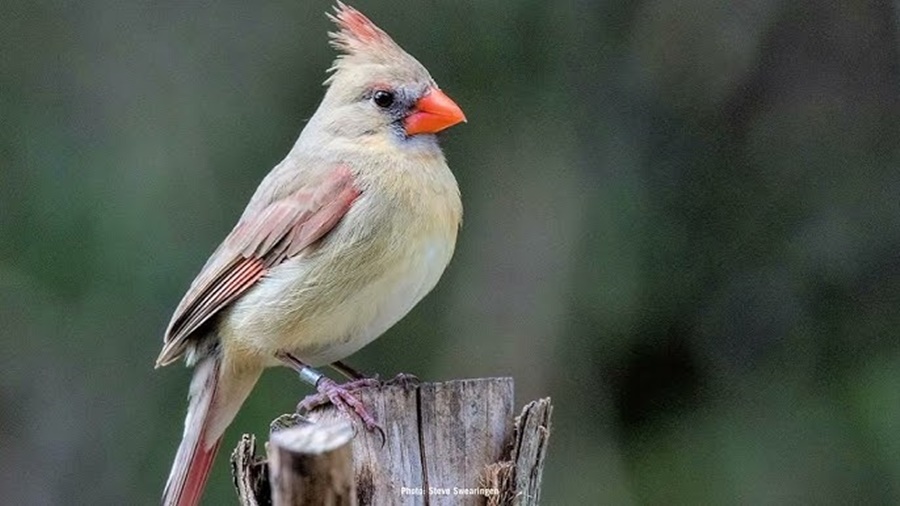
Subtle but Beautiful Female Cardinals
Females look quite different but are just as identifiable:
Warm tan or light brown body
Reddish accents on wings, tail, and crest
A reddish-orange bill
Same raised crest and facial shape as males
Despite their muted coloring, females are often easier to spot once you know what to look for.
3. Distinctive Crest and Beak
One of the cardinal’s most defining features is its upright crest:
The crest rises when the bird is alert, excited, or alarmed
It lies flatter when the bird is relaxed
The thick, triangular beak is designed for cracking seeds and is usually bright orange to red, making it easy to spot even from a distance.
4. Cardinal Songs and Calls
Northern Cardinals are very vocal birds, and their sounds are a key identification clue.
Common Sounds
Clear, whistling songs such as “cheer-cheer-cheer” or “birdy-birdy-birdy”
Sharp metallic “chip” calls used as alarms
Both males and females sing, which is unusual among North American songbirds. Females often sing from the nest, possibly to communicate with their mates.
5. Habitat and Range
Northern Cardinals are widespread and adaptable.
Where You’ll Find Them
Eastern and central United States
Southern Canada
Mexico and parts of Central America
Preferred Habitats
Woodlands and forest edges
Suburban neighborhoods and gardens
Shrubby areas, hedgerows, and parks
They are non-migratory, meaning they stay in the same area year-round.
6. Behavior and Movement
Behavior can help confirm identification.
Typical Cardinal Behavior
Often seen alone or in pairs
Frequently forage on or near the ground
Hop rather than walk
Males can be territorial and may attack their reflection in windows or mirrors
In winter, cardinals may gather in small flocks, making them easier to spot.
7. Diet and Feeding Habits
Northern Cardinals are primarily seed eaters but have a varied diet.
Common Foods
Sunflower seeds (a favorite)
Safflower seeds
Berries and fruits
Insects, especially during breeding season
Their strong beak allows them to crack hard seeds that many smaller birds cannot.
8. How to Tell a Cardinal from Similar Birds
While cardinals are unique, beginners sometimes confuse them with other species.
Common Look-Alikes
Scarlet Tanager: Bright red but lacks a crest and has black wings
Summer Tanager: Red overall but chunkier and no black mask
Pyrrhuloxia (Desert Cardinal): Grayish with red accents, found mainly in the Southwest
The crest, thick red bill, and black facial mask are the best distinguishing features of a Northern Cardinal.
9. Seasonal Changes in Appearance
Cardinals do not undergo dramatic seasonal color changes, but:
Feathers may look duller after molting
Colors appear brighter in good lighting or breeding season
Juveniles are brown with dark beaks until they mature
10. Tips for Spotting Northern Cardinals
Look for flashes of red in shrubs or trees
Listen for loud, clear whistling songs
Set up bird feeders with sunflower seeds
Watch early mornings and late afternoons when they are most active
Because they are bold and not overly shy, cardinals are often visible even to casual observers.
Conclusion
Identifying a Northern Cardinal is both easy and rewarding once you know what to look for. Its vivid red coloring (in males), distinctive crest, strong red-orange beak, musical song, and year-round presence make it one of the most iconic birds in North America. Whether you’re a beginner birdwatcher or a seasoned naturalist, the Northern Cardinal is a species that never fails to impress.
With this guide, you’ll be well-equipped to recognize and appreciate this striking bird wherever you encounter it.