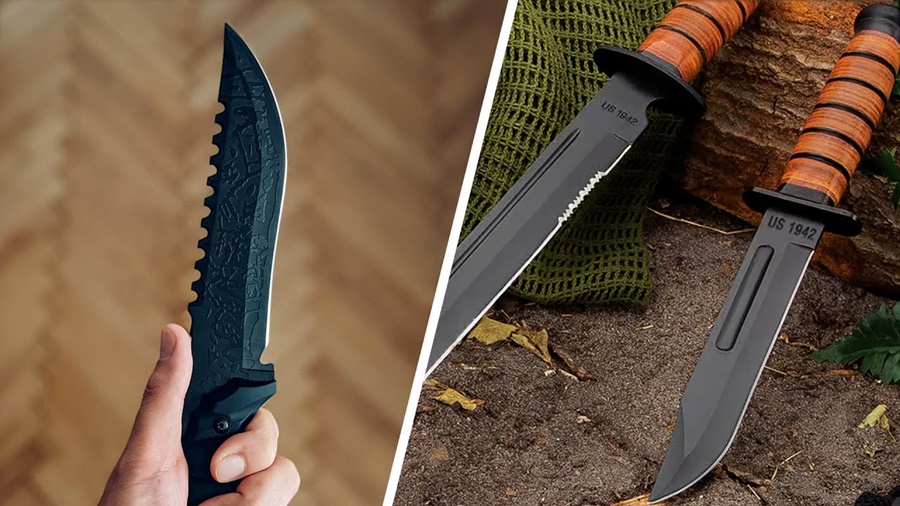
Knives are essential tools for outdoor activities, but not all knives are designed for the same purpose. Two of the most commonly confused types are hunting knives and survival knives. While they may look similar at first glance, their design, features, and intended uses are quite different. Understanding these differences helps users choose the right tool for their needs.
1. Purpose and Intended Use
Hunting Knife
A hunting knife is primarily designed for processing game animals. Its main purpose is skinning, field dressing, and cutting meat efficiently and cleanly. Hunters use this knife after an animal has been harvested.
Survival Knife
A survival knife is designed for emergency and wilderness survival situations. It is meant to perform a wide range of tasks such as cutting wood, building shelters, preparing food, self-defense, and sometimes even signaling for help.
Key Difference:
A hunting knife is specialized for game processing, while a survival knife is a multi-purpose tool for staying alive in harsh conditions.
2. Blade Design and Shape
Hunting Knife
Usually has a curved blade
Often features a drop point or clip point
Designed for precise, controlled cuts
Blade thickness is moderate for clean slicing
Survival Knife
Typically has a thicker, stronger blade
Often has a straight or drop point
Built for durability and heavy-duty tasks
Can handle chopping, batoning, and prying
Key Difference:
Hunting knives focus on precision, while survival knives prioritize strength and versatility.
3. Blade Length and Thickness
Hunting Knife
Blade length usually ranges from 3 to 5 inches
Thinner blade for fine cutting and skinning
Lightweight and easy to maneuver
Survival Knife
Blade length often ranges from 5 to 7 inches or more
Thicker blade for heavy use
Designed to withstand abuse and stress
Key Difference:
Survival knives are generally larger and thicker than hunting knives.
4. Edge Type
Hunting Knife
Typically has a plain (smooth) edge
Ideal for skinning and slicing meat
Provides clean, accurate cuts
Survival Knife
May have a plain edge, serrated edge, or a combination
Serrations help with cutting rope, wood, and fibrous materials
Key Difference:
Hunting knives focus on smooth cutting, while survival knives may include serrations for versatility.
5. Handle Design and Comfort
Hunting Knife
Ergonomic handle for long periods of controlled cutting
Designed to reduce hand fatigue
Often made from wood, rubber, or synthetic materials
Survival Knife
Built for a secure grip in all conditions
Often textured or rubberized
Designed to work well even when wet, cold, or muddy
Key Difference:
Survival knife handles emphasize grip and durability, while hunting knives emphasize comfort and control.
6. Additional Features
Hunting Knife
Usually simple in design
May include a gut hook
Focuses on performance rather than extras
Survival Knife
May include additional features such as:
Fire-starting capability
Hammer pommel
Lashing holes
Multi-tool functions
Key Difference:
Survival knives often include extra features for emergencies, while hunting knives remain simple and specialized.
7. Weight and Portability
Hunting Knife
Lightweight
Easy to carry during long hunts
Often worn on a belt or in a small sheath
Survival Knife
Heavier due to thicker blade and added features
Designed to be a primary tool in survival situations
Key Difference:
Hunting knives are lighter and easier to carry, while survival knives trade weight for strength.
8. Skill Level and Use Case
Hunting Knife
Best suited for hunters and outdoor enthusiasts
Ideal for controlled, precise tasks
Survival Knife
Suitable for adventurers, campers, military personnel, and emergency preparedness
Designed for unpredictable situations
Key Difference:
Hunting knives serve a specific role, while survival knives are built for adaptability.
Conclusion
Although hunting knives and survival knives may appear similar, they are designed for very different purposes. A hunting knife excels at skinning and processing game with precision and efficiency. A survival knife, on the other hand, is a robust, all-purpose tool built to handle a wide range of tasks in emergency situations.
Choosing between the two depends on your needs. If your primary goal is hunting, a hunting knife is the better option. If you need a tool for wilderness survival and unpredictable conditions, a survival knife is the more suitable choice.
Understanding these differences ensures you select the right knife for safety, efficiency, and success in the outdoors.