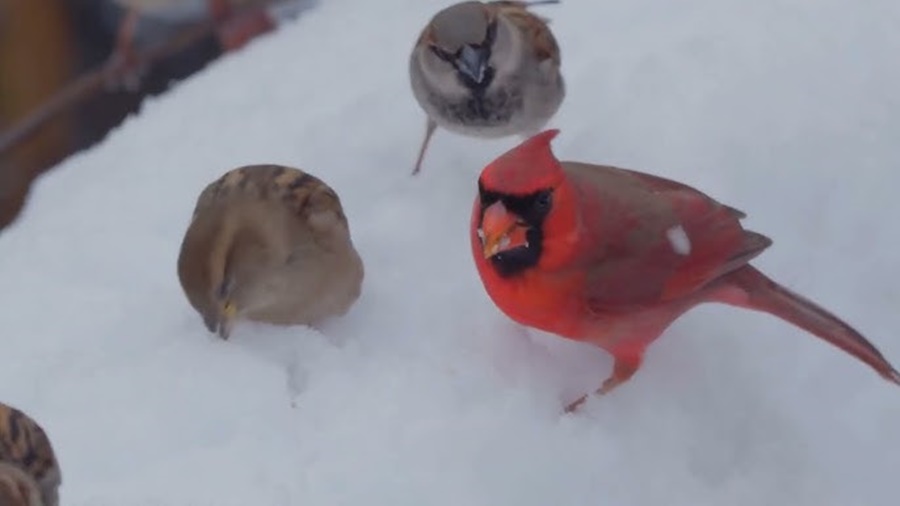
The Northern Cardinal (Cardinalis cardinalis) is one of the most recognizable and beloved songbirds in North America. Known for its brilliant red plumage, melodic songs, and year-round presence, the cardinal is often associated with vitality, beauty, and resilience. Beyond its striking appearance, the Northern Cardinal displays a range of fascinating behaviors and traits that make it unique among backyard birds.
Physical Characteristics
Distinctive Plumage
One of the most notable traits of the Northern Cardinal is its sexual dimorphism:
Males are bright red with a black mask around the beak and eyes.
Females are more subdued, displaying warm brown tones with reddish highlights on the wings, tail, and crest.
Both sexes have a prominent crest on the head, which they raise or lower to express mood or alertness.
Strong, Conical Beak
Cardinals possess a thick, cone-shaped beak designed for cracking seeds. This powerful beak also allows them to eat a variety of foods, from hard sunflower seeds to fruits and insects.
Habitat and Range
Geographic Distribution
Northern Cardinals are found throughout:
Eastern and central United States
Southern Canada
Parts of Mexico and Central America
Their range has expanded northward over the last century due to milder winters and increased availability of backyard feeders.
Preferred Habitats
Cardinals thrive in:
Woodlands and forest edges
Suburban neighborhoods
Gardens and parks
Shrubby wetlands
They prefer areas with dense vegetation that provides cover for nesting and protection from predators.
Feeding Behavior
Diet
Northern Cardinals are omnivores with a diet that includes:
Seeds (especially sunflower and safflower)
Fruits and berries
Insects such as beetles, grasshoppers, and caterpillars
During breeding season, insects become especially important as a protein source for growing chicks.
Feeding Style
Cardinals are primarily ground feeders, often hopping along the ground beneath feeders to pick up fallen seeds. Unlike many birds, they prefer platform or tray feeders rather than hanging ones.
Vocalizations and Communication
Songs
The Northern Cardinal is a prolific singer, and notably, both males and females sing a rare trait among songbirds. Their songs are clear, whistled phrases often described as:
“Cheer, cheer, cheer”
“Birdie, birdie, birdie”
Songs are used to:
Establish territory
Attract mates
Communicate with partners
Calls
In addition to songs, cardinals use sharp “chip” calls to warn others of predators or intruders. Females often use calls to signal when they are ready to be fed by the male during nesting.
Territorial Behavior
Year-Round Territory Defense
Unlike many migratory birds, Northern Cardinals are non-migratory and defend territories throughout the year. Males are particularly aggressive toward perceived rivals.
A common behavior is attacking their own reflection in windows or mirrors, mistaking it for another cardinal invading their territory.
Crest and Body Language
Cardinals communicate mood and intent through posture:
Raised crest: alert, agitated, or excited
Flattened crest: calm or relaxed
Breeding and Nesting Behavior
Courtship Displays
Courtship includes:
Singing exchanges between male and female
Food sharing, known as mate-feeding, where the male feeds the female as a bonding behavior
Nest Building
Females typically build the nest alone using:
Twigs
Grass
Bark strips
Leaves
Nests are placed in dense shrubs or low trees, usually 3–10 feet above ground.
Eggs and Parenting
Clutches usually contain 2–5 eggs
Eggs are pale gray or greenish with brown speckles
Incubation lasts about 12–13 days
Both parents feed the chicks, though the female does most of the brooding. Cardinals often raise two or more broods per year.
Social Behavior
Pair Bonds
Northern Cardinals often form monogamous pair bonds that may last for several breeding seasons. Pairs remain together year-round, which is uncommon among many songbird species.
Flocking
Outside of breeding season, cardinals may gather in small flocks, sometimes mixed with other bird species, especially around reliable food sources.
Intelligence and Adaptability
Cardinals are highly adaptable birds. They quickly learn:
The locations of reliable feeders
Human routines
Safe nesting spots in suburban environments
Their adaptability is a key reason for their population stability and expanding range.
Seasonal Behavior
Winter Traits
Unlike many birds, cardinals do not migrate. During winter:
Their red plumage becomes even more striking against snow
They rely heavily on feeders and natural seed sources
They reduce singing but remain territorial
Molting
Cardinals molt once a year, typically in late summer, replacing worn feathers. During this time, they may appear less vibrant and more secretive.
Lifespan and Survival
Average lifespan in the wild: 3–5 years
Some individuals live over 10 years under favorable conditions
Predators include cats, hawks, snakes, and raccoons, while window collisions are a common human-related threat.
Conclusion
The Northern Cardinal is far more than a beautiful red bird it is a complex, intelligent, and resilient species with rich behavioral patterns. From its expressive crest and melodic songs to its strong pair bonds and adaptability to human environments, the cardinal embodies both strength and grace. These traits have helped it flourish across much of North America and secure its place as one of the most cherished backyard birds.
Whether seen singing from a treetop or hopping beneath a feeder, the Northern Cardinal remains a vivid symbol of nature’s enduring presence in our everyday lives.